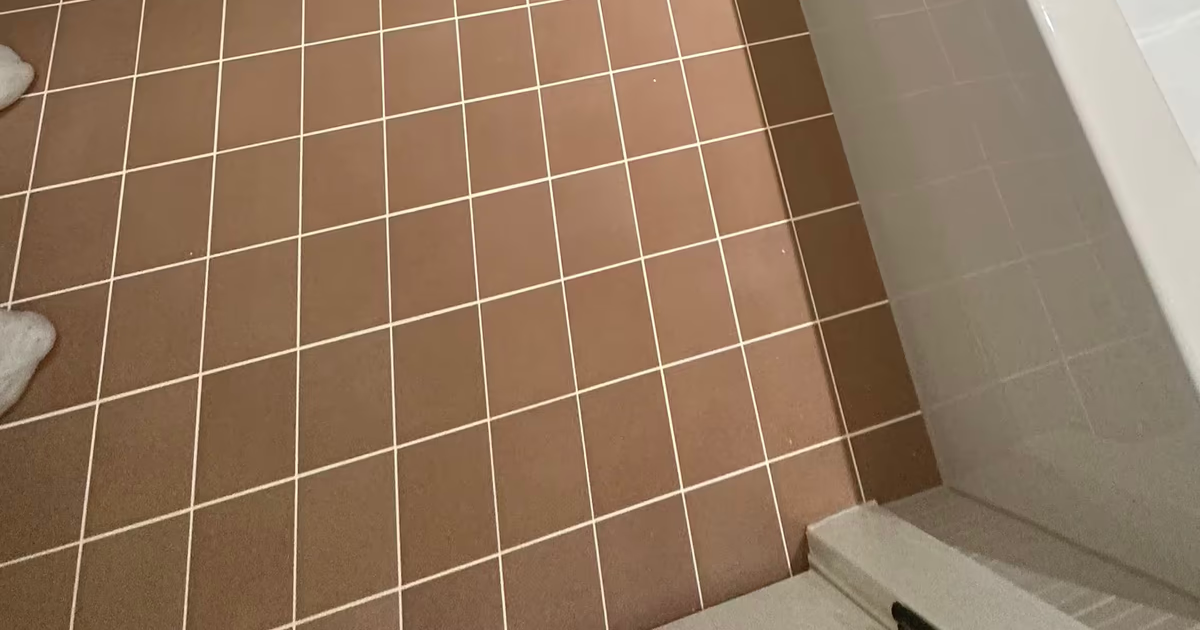
A heated tile floor is the one bathroom upgrade almost nobody regrets, and in a Denver January it earns its keep every morning. It is also a system that gets buried under mortar and tile for the life of the bathroom, so the decisions that matter are made before the first tile goes down. Here is what is inside the floor, what the manufacturers require, and where the electrician and the inspector come in.
Electric or hydronic, and the three electric formats
Hydronic radiant heat circulates warm water through tubing under the floor. It is the right answer when a whole house or a large addition is designed around it, because it needs a boiler or water heater, a manifold and a pump, and it adds thickness a single bathroom cannot usually absorb. For one bathroom in an existing house, electric floor warming is the practical system: a resistance cable in the mortar directly under the tile, on its own thermostat and its own circuit. It comes in three formats:
| Format | Examples | How the cable is held | Output (manufacturer data) | What goes over it |
|---|---|---|---|---|
| Cable in an uncoupling membrane | Schluter DITRA-HEAT, DITRA-HEAT-DUO | Membrane studs grip the cable; spacing is chosen on site | Depends on cable spacing; 3-stud spacing is Schluter's standard | Thin-set and tile directly on the membrane; Schluter does not allow self-leveler over it |
| Pre-built mat | Nuheat Standard and Custom Mats, SunTouch TapeMat, WarmlyYours TempZone rolls | Cable factory-fixed to a mesh or tape at set spacing | Nuheat 12 W/sq ft (custom 12 or 15); SunTouch 12 W/sq ft at 3 in.; WarmlyYours 15 W/sq ft | Embedded in thin-set or self-leveler, then tile; SunTouch specifies 3/8 in. or more of mortar |
| Loose cable on strips | WarmlyYours TempZone cable, SunTouch WarmWire | Plastic strips or tape hold the cable at the spacing you choose | WarmlyYours: 3.7 W per foot of cable, about 15 W/sq ft at 3 in. and 11 at 4 in. | Same as mats: encapsulated in mortar or self-leveler before tile |
The membrane format gives you uncoupling and heat in one layer about a quarter inch thick; our bathroom tile installation page lists the systems we work with. Mats are fast on simple rectangles; loose cable fits odd shapes with the least waste. The finished floor feels the same with any of them.
Where the heat layer sits in the floor assembly
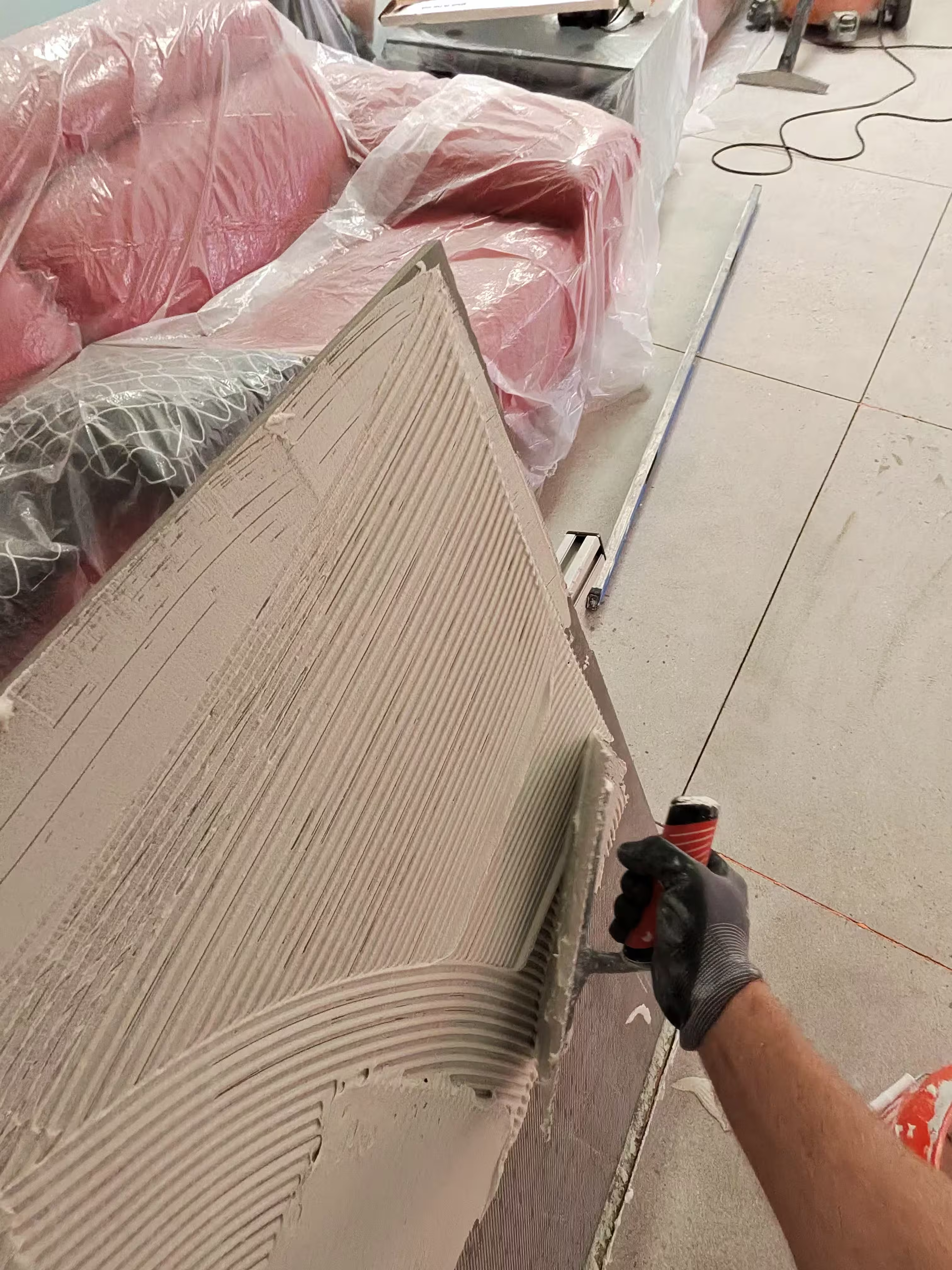
From the bottom up, a heated tile floor is: a flat, sound subfloor (plywood or concrete); the heating layer; the mortar that encapsulates the cable; and the tile. With a membrane system, the membrane is bonded to the subfloor with thin-set, the cable is pressed into the studs, and the tile is set directly on top with thin-set that fills around the cable. Schluter is specific: tile can go on right after the cables are embedded and tested, no self-leveling compound is required under tile, and self-leveler is only approved when a non-tile floor covering goes over the membrane.
With a mat or loose cable, the cable is covered first. SunTouch specifies at least 3/8 in. of self-leveling or polymer-modified mortar over the TapeMat, and WarmlyYours says its cables and mats "must be embedded in thinset or self-leveling compound directly above the subfloor and below the finished flooring material." Some installers pour self-leveler over the cable and tile the next day on a flat surface; others set the tile directly into a thicker mortar bed over the cable. Both are accepted when the depth and the product are right. What no system accepts is a cable sitting against the back of a tile with air around it. Voids are insulation and hot spots at the same time.
Why tile is the right finish over radiant heat
Every manufacturer offers these systems under vinyl, laminate and engineered wood, but their own guidance says tile and stone perform best. WarmlyYours: "Tile and stone are the most efficient as they conduct heat naturally." SunTouch: "the most popular warm floors are tile and stone." The reason is physical: porcelain, ceramic and stone are dense and conductive, so they move the cable's warmth to the surface quickly and then hold it. A wood or vinyl layer insulates the cable from your feet; tile does the opposite.
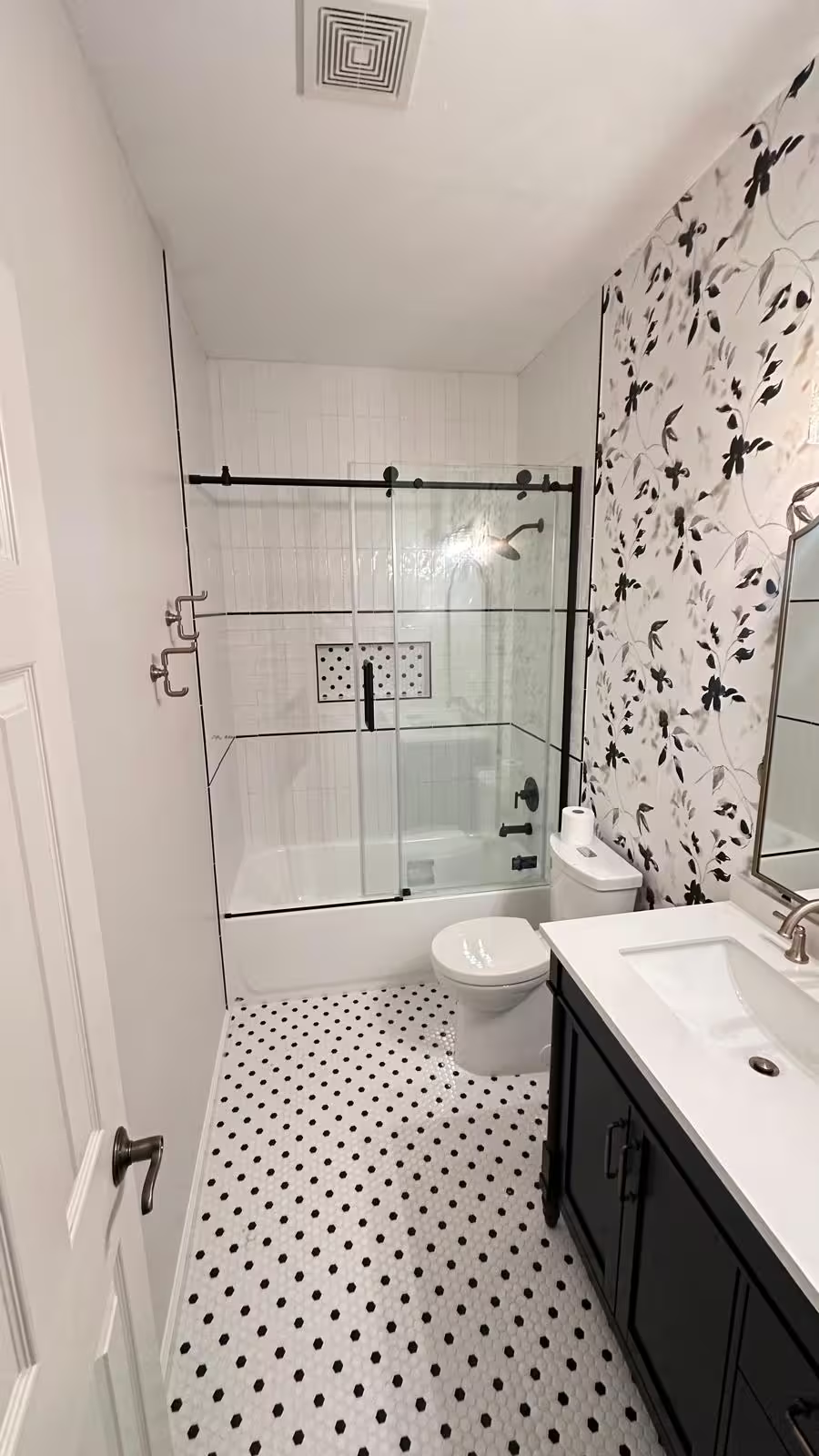
The tile choice still has limits. Schluter's FAQ sets a minimum tile size of 2 in. by 2 in. over the DITRA-HEAT membrane and asks you to call them for anything smaller, so a penny-round or small hexagon mosaic needs that conversation first. Large-format porcelain, standard-format ceramic and most stone are straightforward; our porcelain, ceramic and stone page covers the trade-offs.
Thermostat, floor sensor and GFCI
The floor is controlled by a dedicated line-voltage thermostat that reads a sensor buried between two cable runs. The floor sensor lets the thermostat hold the tile at a set temperature instead of guessing from air temperature, and it protects the cable and tile from being overdriven. Schluter and WarmlyYours both ship two sensors per system for one reason: a sensor cannot be replaced once the tile is down, so the spare goes in next to the first and stays unconnected.
Ground-fault protection is the part with a code behind it. NEC Article 424 covers electric space heating cables; as EC&M summarized section 424.44(G), GFCI protection for personnel is required for heating cables installed in the floors of bathrooms, kitchens and hydromassage tub locations. The Colorado State Electrical Board has adopted the 2023 NEC, and your local electrical inspector enforces it. In practice the GFCI is built into the thermostat: Schluter's DITRA-HEAT-E-RS1 has "a built-in Class A ground fault circuit interrupter," WarmlyYours' thermostats list "GFCI, Class A, 5 mA," and Nuheat says its controls are "equipped with ground fault circuit interrupter (G.F.C.I.) protection." SunTouch and WarmlyYours both warn against also putting the circuit on a GFCI breaker; two GFCIs in series invite nuisance tripping.
Every one of these thermostats is programmable, and that is the Denver angle. The normal January low at Denver is 18.7 F, and our dry winter air makes a room-temperature tile floor feel colder than the thermometer says. A schedule that brings the floor up before the first shower and lets it drift down after the household leaves is how the system earns its keep without running all day.
What it draws
We do not publish operating-cost figures; they depend on your electricity rate, how many hours the floor runs and how warm you keep it, as SunTouch's FAQ says. What the data sheets let you calculate is the load: a 12 W/sq ft system over 40 sq ft of open floor draws about 480 W while the cable is energized, a 15 W/sq ft system about 600 W, and the thermostat cycles it, so the draw over an hour is less. Multiply by your hours and your rate and you have a ceiling, not a bill.
Permits and the electrician in Colorado
Two trades meet in a heated floor. The tile crew installs the membrane, lays the cable, tests it and tiles. The electrician runs the dedicated circuit, sets the box and conduit for the thermostat, makes the final connections and has the work inspected. Colorado law (C.R.S. 12-115-109) requires a state license to work as an electrician, with an exemption for a homeowner working on his or her own residence subject to inspection (C.R.S. 12-115-116); Larimer County's building division summarizes it as only state-licensed electricians or homeowners working on the home they live in. The manufacturers agree. Nuheat: "All wiring connections should be completed by a certified electrician." Schluter: "all electrical connections must be made by a qualified person." WarmlyYours recommends a licensed electrician for the final thermostat hook-up.
So the rule of thumb for a Denver, Aurora, Parker or Highlands Ranch bathroom: an electrical permit is pulled for the new circuit, a licensed electrician does the wiring and the connection, and the tile contractor does the floor. We tile; the electrician wires. Which office issues the permit (city, county or state board) depends on the address; the electrician will know, and will schedule the inspection around the floor work. Keep the cable test log for the inspector and the warranty registration.
Showers, vanities and toilets: where the cable cannot go
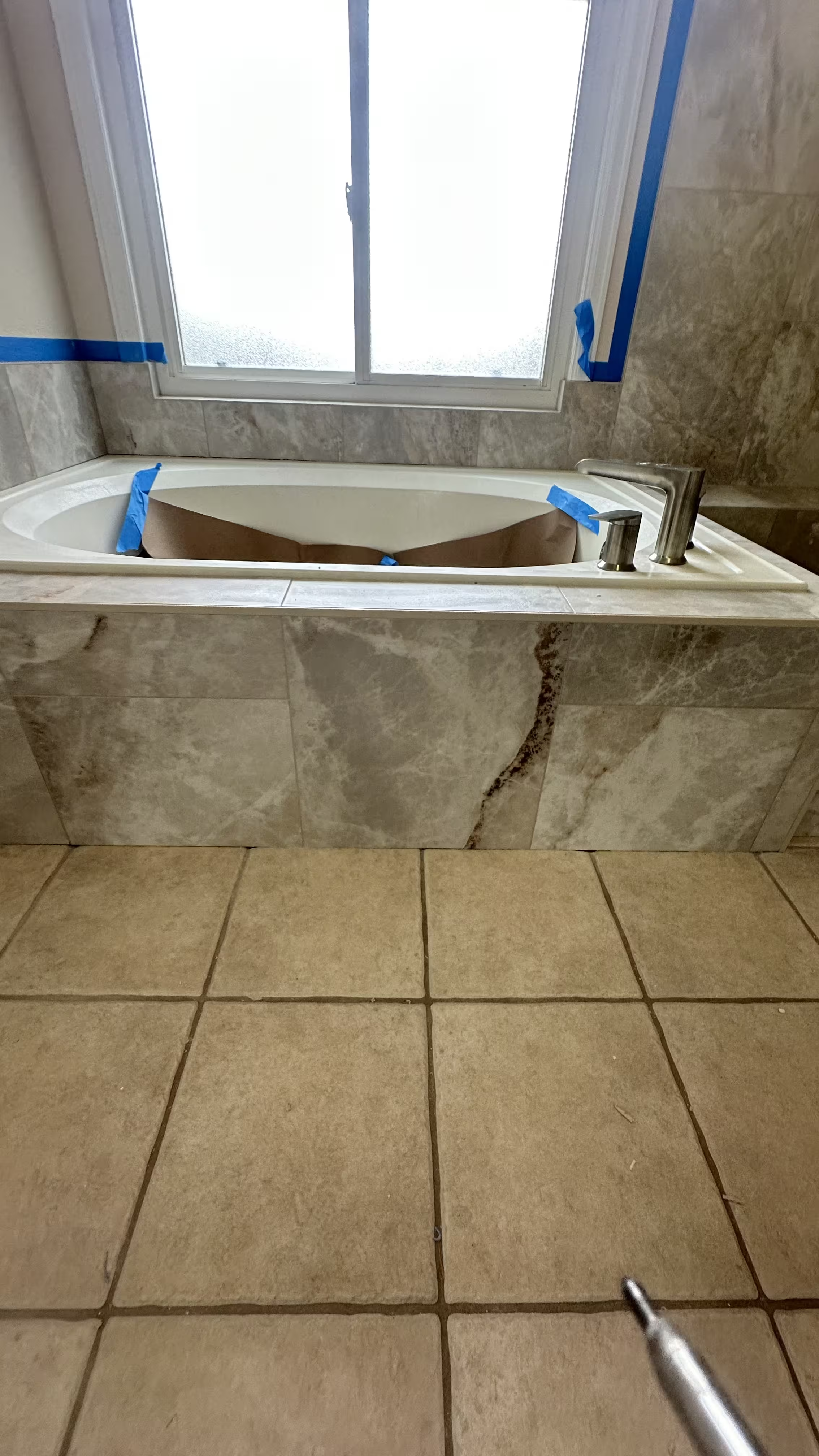
A heated bathroom floor is a heated open floor. The manufacturers keep the cable out of places where heat can build up with nowhere to go, and away from things that get drilled, bolted or soaked. Schluter's list for DITRA-HEAT: no cable under vanities with no air space beneath, under bathtub platforms, under freestanding tubs without an air gap, under cabinets, islands, appliances or other fixtures, or in small closets where items sit on the floor, because "excessive heat will build up in these confined spaces and may cause cable overheating." A vanity with open air space beneath it is the exception. SunTouch says to subtract "all built-ins (such as tub, toilet, and cabinets)" when sizing a system.
| Keep the cable at least this far from | Schluter DITRA-HEAT (manufacturer) | Other manufacturers |
|---|---|---|
| Walls, partitions and fixed cabinets | 2 in. (50 mm) | Similar edge clearances in each manual |
| Centerline of the toilet drain | 7 in. (180 mm) | WarmlyYours: at least 4 in. from the wax ring; SunTouch: stay away from the toilet ring |
| Any drain pipe | 4 in. (100 mm) | Check the manual |
| Linear drain channel (KERDI-LINE) | 4 in. from the pipe, 1 in. from the channel body | Not applicable |
| Forced-air floor vents | 4 in. (100 mm) | Check the manual |
| Other heat sources (baseboard, fireplace) | 8 in. (200 mm) | Check the manual |
The toilet clearance is the one homeowners push back on, because that is where you stand barefoot. It exists so the closet bolts and the flange never meet the cable, and so a future plumber replacing the wax ring does not cut it. The cable runs around the flange at the set distance and the tile in front of the toilet is still warm; tile spreads heat sideways.

Can the shower floor be heated?
Only with a product listed for it, installed the way its handbook describes, with the inspector's acceptance. Schluter says DITRA-HEAT can go in the shower area with KERDI-LINE-TF and on top of a shower bench, with KERDI waterproofing installed over the DITRA-HEAT, and that "acceptance of electric floor warming in a shower and on the top surface of shower benches must be verified by the local inspector or authority having jurisdiction (AHJ) during the design process and prior to installation." Nuheat lists its mats as suitable for "shower floors, shower benches, and steam rooms," and SunTouch says its mats and WarmWire "are UL listed for installation in a custom shower floor or bench application."
Two things follow. First, in a shower the heating layer sits under the waterproofing, never on top of it; the membrane is what keeps water out of the floor, and a cable above it would mean penetrating or bypassing it (see Tile and Grout Are Not Waterproofing). Second, Schluter's approved shower detail is a bonded-membrane shower built with its own components; a traditional mortar pan over a PVC liner is not the place for a cable unless the manufacturer's shower instructions cover that build. Our own recommendation, not a manufacturer rule: give the shower its own cable and keep the floor sensor on the dry side of the curb, so hot shower water does not drive the thermostat. For a rebuild that includes heat, start with our shower remodeling page.
Testing, nicked cables and the warranty
Every manufacturer requires the cable to be tested in stages and ties the warranty to it. Nuheat: "Standard Mat resistance must be tested before, during and after installation to validate Nuheat warranties." SunTouch: "measure and certify the correct wire resistance (ohms) value for the heating cables, record these readings in the chart provided in the installation manual." Schluter requires every result to go in the Heating Cable Tests Log in its handbook, and submitting that log with the warranty registration extends the system warranty by five years to fifteen. The sequence:
- Out of the box. Resistance between the two conductors is measured and compared with the value on the label, within the tolerance the manual gives. A continuity check from the ground braid to each conductor should read open.
- After the cable is laid, before mortar. Same readings. This is the last point at which a problem is cheap to fix.
- Insulation resistance. Schluter strongly recommends a megohmmeter test at each stage because "the insulation resistance test is intended to detect very small breaks throughout the cable insulation before, during, and after installation," breaks that a continuity test passes but that will trip the GFCI later. "An ordinary ohmmeter or multi-meter is not capable of producing the required voltage."
- During tiling. An alarm meter stays clipped to the cable while the mortar and tile go down. WarmlyYours' Circuit Check "beeps the moment a cable is nicked"; SunTouch recommends its LoudMouth meter for the same job. If the alarm sounds, the tile comes back up right there, while the mortar is still wet.
- After grouting, before the electrician connects it. Final readings, logged, and handed to the electrician and the homeowner.
Then the floor waits. Schluter says to wait seven days after grouting before regular use; WarmlyYours says not to energize the system until the mortar, underlayment and grout have fully cured per their manufacturers' times. Turning a floor on early to speed up the cure is one of the fastest ways to crack grout and debond tile.
If a cable is nicked
The usual damage is a trowel notch, a tile edge dragged across the cable, a screw through the floor by another trade, or a cut made to shorten it. The last one is in a class by itself: every manufacturer says never cut the heating cable, because shortening it changes the resistance and can overheat it. Schluter: "Never cut the heating cable." SunTouch: "Never cut the heating cable or damage it in any way."
A nick found during installation is repairable. Schluter sells a repair kit that replaces one damaged section up to 10 in. long, plus a splice kit for a factory splice; SunTouch sells a heating wire repair kit. Both say the repair is done by an electrician, not the tile setter. What the repair does not do is restore the warranty. Schluter's repair kit page is unambiguous: deviating from the handbook, including damaging the cable, "has voided the Schluter-DITRA-HEAT Limited System Warranty," and "warranty coverage is not reinstated upon repair of the heating cable." That is why the alarm meter stays on during tiling, and why we would rather lift a tile than find a fault after the grout has cured.
Other things that void or limit coverage, from the same manufacturer pages: skipping or failing to record the resistance tests (Nuheat and Schluter both tie the warranty to them); self-leveler over DITRA-HEAT under tile; cable under a vanity base, tub platform or cabinet; cable on a wall (not permitted by North American electrical codes, per Schluter); and outdoor use. A fault found years later usually traces to one of these, and a thermostat tripping its GFCI is the first symptom.
Planning a bathroom floor and want the heat done right the first time? We install the membrane, lay and test the cable, log the readings, and tile over it; a licensed electrician handles the circuit and the connection. Tell us the room and the tile you have in mind.
Frequently asked questions
Can a heated floor be added under existing tile?
No. The cable has to be embedded in mortar under the tile, so the existing tile comes up. (Schluter says DITRA-HEAT over an existing tile floor may be possible with special considerations, but the new tile still goes on top.) If the floor is coming up anyway as part of a bathroom remodel, that is the moment to add it.
Does a heated floor replace the bathroom's heat?
It depends on output and room. Nuheat's brochure says its 12 W/sq ft mats can replace electric baseboard heat in most rooms; WarmlyYours calls 4 in. spacing (about 11 W/sq ft) supplemental only and 3 in. spacing primary or supplemental. In a Denver bathroom with an exterior wall and a window, treat it as floor warming unless an HVAC contractor has run the heat-loss numbers.
How much height does it add?
The DITRA-HEAT membrane is a nominal 1/4 in. (5.5 mm) thick with the cable inside it, plus thin-set and tile. A mat or loose cable under 3/8 in. or more of self-leveler adds roughly that much before the tile. Plan the threshold and door clearance before the floor is chosen, not after.
What happens if the floor stops heating years later?
Start at the thermostat: a tripped GFCI, a failed thermostat or a failed sensor are the common, fixable causes, and the spare sensor can be connected without touching the tile. A cable fault is rarer; it is located with the manufacturer's fault-finding procedure, one tile is lifted, and an electrician makes the repair. The grout you chose affects how cleanly that tile comes up.
Sources and notes
- Schluter-Systems: DITRA-HEAT product page — uncoupling membrane with studs that hold the cable; nominal 1/4 in. thickness; tile goes directly over the membrane; self-leveling compound not required under tile; DITRA-HEAT-DUO thermal break; 15-year limited system warranty.
- Schluter FAQ: restrictions on where DITRA-HEAT heating cables can be installed — no cable under vanities without air space, tub platforms, cabinets or appliances; minimum spacing from walls, heat sources, vents, toilet drains and drain pipes.
- Schluter FAQ: why megohmmeter testing is strongly recommended — insulation resistance test before, during and after installation; an ordinary multimeter cannot do it; test log submitted with registration extends the system warranty by 5 years to 15.
- Schluter FAQ: can DITRA-HEAT-E-HK cables be installed on a shower bench? — yes on the bench top, with KERDI installed over the DITRA-HEAT and acceptance verified by the local inspector or AHJ before installation.
- Schluter FAQ: can DITRA-HEAT be installed in the shower area with KERDI-LINE-TF?
- Schluter-Systems: DITRA-HEAT-E-HK-RK repair kit — replaces one damaged section up to 10 in.; repairs only by a qualified electrician; damage voids the limited system warranty and coverage is not reinstated after repair; never cut the cable.
- Schluter-Systems: DITRA-HEAT-E-RS1 thermostat — built-in Class A GFCI; 10k floor sensor; two sensors supplied per cable box; 15 A total load limit; app scheduling; all electrical connections by a qualified person.
- Schluter-Systems: DITRA-HEAT FAQ index — tile at least 2 in. x 2 in. over the membrane; cables not permitted on walls; 3-stud spacing standard; wait 7 days after grouting; no self-leveler over the membrane.
- WarmlyYours: TempZone floor heating — 15 W/sq ft rolls and mats; 3.7 W per linear foot of cable, so output depends on spacing; cable embedded in thin-set or self-leveling compound; thermostat with Class A GFCI; two floor sensors; Circuit Check alarm; do not energize until mortar and grout have cured; tile and stone conduct heat naturally.
- WarmlyYours: TempZone cable kit TCT120-KIT-UTN5-150 (product data) — 25-year cable warranty, 3-year thermostat warranty; licensed electrician recommended for the final thermostat hook-up; keep the heating wire at least 4 in. from the toilet wax ring.
- nVent Nuheat: Standard Mats — 12 W/sq ft; resistance must be tested before, during and after installation to validate the warranty; wiring by a certified electrician; floor sensor set between heating wires.
- nVent Nuheat: Mat brochure (PDF) — suitable for wet areas such as shower floors and benches; 12 or 15 W/sq ft; controls have GFCI protection; up to 150 sq ft on one 120 V circuit; 25-year warranty.
- SunTouch TapeMat engineering specification (PDF) — 12 W/sq ft at 3 in. spacing; embedded in 3/8 in. or more of self-leveling or polymer-modified mortar; measure and certify ohm values and record them; LoudMouth alarm meter recommended; UL 1693 listed; never cut the cable.
- SunTouch: FAQs — systems must be installed with GFCI protection, which the thermostat provides; mats and WarmWire are UL listed for custom shower floors and benches; repair kit installed by a licensed electrician; cost depends on hours of use and electricity rate.
- Russ LeBlanc, EC&M: GFCI Protection for Cables Installed in Heated Floors — NEC 424.44(G), 2014 edition: GFCI protection for personnel for heating cables in the floors of bathrooms, kitchens and hydromassage tub locations; 110.3(B) makes the listing instructions binding.
- Larimer County Building Division: Electrical Permitting and Inspections — only state-licensed electricians or homeowners doing their own work on the home they live in may perform electrical work; the State Electrical Board adopted the 2023 NEC.
- C.R.S. 12-115-109, Electrician must have license
- C.R.S. 12-115-116, Exemptions (homeowner work on own residence, subject to inspection)
- National Weather Service Denver/Boulder: Monthly Weather Summary, January 2026 (PDF) — normal January average low at Denver 18.7 F, normal mean 31.7 F.
- South Denver Tile Experts: Bathroom tile installation in Denver
Code references are to the model International Residential Code (IRC). Denver, Aurora, Parker and other metro jurisdictions adopt different editions with local amendments, so confirm requirements with your building division before relying on them. Last reviewed October 26, 2026.