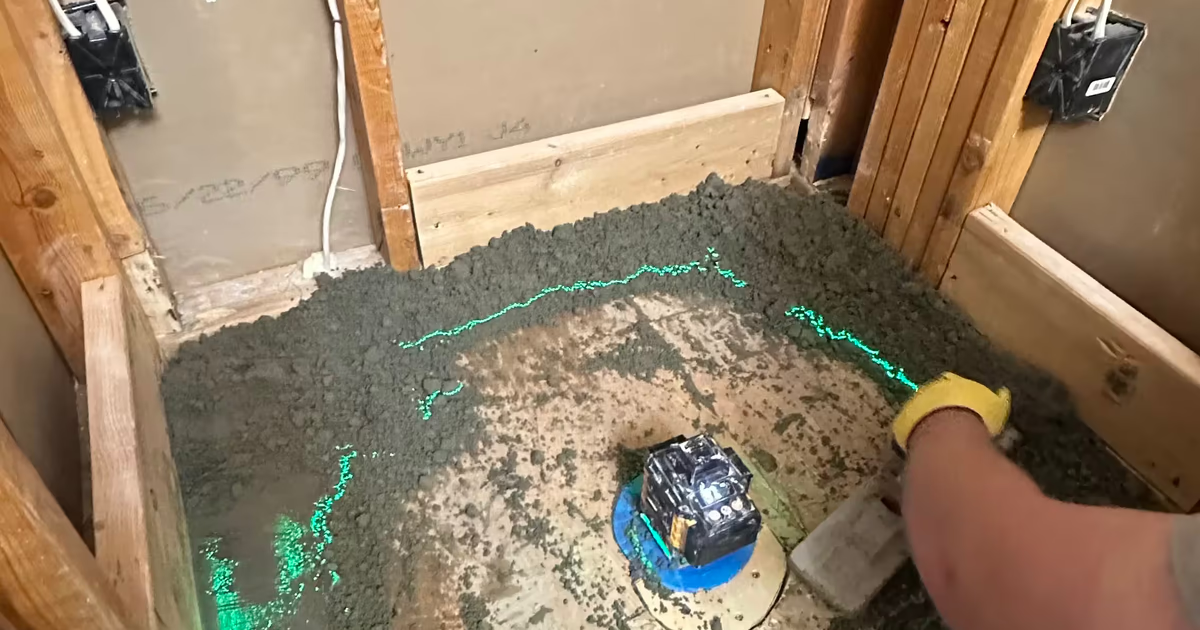
A bathroom remodel that moves plumbing, adds wiring or opens walls typically needs a permit in Denver, Aurora and Parker. A cosmetic refresh typically does not. Which permits, who pulls them, what they cost and when the inspector comes depend on the jurisdiction your address is actually in. Here is what each city publishes, and how to schedule the inspections so they don't stall the job.
What typically needs a permit in a bathroom, and what doesn't
A note on terms: "the code" means the model International Residential Code (IRC), which each city adopts with its own amendments; what a city "lists" or "says" comes from its own published pages, linked below; "our practice" is what we do on our jobs, and "we recommend" marks advice. None of this is legal advice, and site conditions, the products chosen and local amendments can change the answer for a specific house.
The three cities draw the line in slightly different places, but the pattern is the same: the more a job reaches behind the wall, the more likely it needs a permit. Aurora's homeowner handbook puts it plainly: if remodeling work "entails changing anything within the wall space (i.e. wiring, plumbing, etc.), a building permit is needed". The model code points the same way: its permit exemptions include "painting, papering, tiling, carpeting, cabinets, counter tops and similar finish work", but each city decides how much of that list it keeps.
| Work | Denver | Aurora | Parker |
|---|---|---|---|
| Paint, tile, flooring, cabinets, countertops | No permit: painting, tiling, floor coverings, countertops and cabinets are on the city's no-permit list | No permit for painting or cosmetic flooring; cabinet and countertop replacements only need one if plumbing changes | Cosmetic work excluded, but permits are required for "kitchen and bath remodels" and dry-walling beyond cosmetic alterations |
| Like-for-like fixture swap (same faucet, sink or toilet location) | No permit for like-for-like plumbing fixtures | Sinks: no permit unless in-wall pipes are touched. Toilets: no permit unless piping is added or moved | Not listed separately; ask |
| Moving or adding a toilet, sink, tub or shower | Permit: new or relocated plumbing fixtures | Permit: moving a sink, toilet or bathtub; showers are listed as a permit item with framing and plumbing inspections | Permit: plumbing alterations and upgrades |
| New circuit, outlet or light where none existed | Permit: new or relocated electrical fixtures, usually an online electrical quick permit | Permit when a new device goes where none existed | Permit: electric alterations and upgrades |
| Exhaust fan | No permit for like-for-like ventilation; permit for new or rerouted ductwork | Not listed separately in the city handbook; ask | Not listed separately; ask |
| Moving walls, new doorways or windows, structural work | Permit: floor plan changes, load-bearing walls, new or resized openings | Permit: interior remodels beyond "cosmetic only with no moving of walls"; structural modifications | Permit: structural alterations; window and door replacements |
Parker calls its list "limited examples" and points to Section 301 of its administrative code, so treat any "ask" in the table as a question for the town.
Two things trip people up. "Like-for-like" means the same fixture in the same place with nothing changed behind it, and a new shower is rarely that: it usually brings new waterproofing and often a new drain or valve. Denver lists "showers, tubs, and sinks" and "water closets" among the plumbing items it issues as quick permits, which skip plan review. And a cosmetic job can become a permit job after demolition, when rot, a drain that has to move or bad wiring turns up; see Hidden Problems Found During Bathroom Demolition.
Which permits, and who pulls them
A bathroom can involve a building permit (layout, framing, structural work) plus trade permits for plumbing, electrical and mechanical work such as exhaust ductwork. Denver's fee policy says that once a project clears review, separate permits are required for each discipline, and its remodel page says trade permits are "in most cases, issued online as quick permits".
Plumbing and electrical work is licensed at the state level. Colorado law requires plumbers to hold a state license, and a plumbing contractor to be registered with the State Plumbing Board with a master plumber supervising the work. Electricians need a state license too. The State Electrical Board's rules say a wiring permit is issued to the homeowner doing the work or to the registered electrical contractor performing it, and that a contractor shall not perform electrical work under a homeowner's permit. Each city also licenses contractors: Denver requires permits to be pulled by contractors licensed with the city, Aurora says hired contractors must be licensed by the city, and Parker requires all contractors to be licensed in the Town.
Homeowner permits
State law lets a homeowner do plumbing or electrical work on his or her own property or residence without a license, with exceptions for property intended for sale by someone in the building or remodeling business, rentals, and commercial or public buildings. Electrical work done this way still has to be inspected (C.R.S. 12-155-118, 12-115-116). The cities add their own conditions:
- Denver: single-family homes only (no ADUs, townhomes, condos or duplexes). You must own the home, live there and occupy it for at least a year after the work. Electrical, plumbing and mechanical work requires passing a homeowner exam, though a state license can substitute for the electrical or plumbing exam. Homeowners request quick permits by email with a photo ID, not through e-permits (homeowner permits).
- Aurora: homeowners can obtain permits for work on their primary home. The city's handbook says most remodeling projects can be permitted without plan submittal and done by the owner, though its permits list marks bathroom remodels as needing plans, so ask.
- Parker: homeowners apply through eTRAKiT like everyone else; the town runs an EZ Permits program for do-it-yourself projects, by appointment on Wednesday mornings.
Whose name is on the permit matters. Denver puts it in one line: "The permit holder bears responsibility for the work covered by the permit." If someone you are paying asks you to pull a homeowner permit for work they will do, treat it as a red flag. Aurora's handbook adds another: beware of any contractor who says a building permit is not required. See also How to Choose a Shower Remodeling Contractor.
Check which building department your address is in
A Parker mailing address does not mean the Town of Parker issues your permit. The town's own FAQ says the Parker ZIP code "includes property in the Town, unincorporated Douglas County and unincorporated Elbert County", and points homeowners to the Douglas County Assessor's property search or the town (303-841-0353) to check. If the house is in unincorporated Douglas County, the permit comes from the Douglas County Building Division in Castle Rock, whose online services include an address jurisdiction search. Across the metro, the city on the envelope and the jurisdiction on the permit can differ, which is why our practice on a bathroom remodel or any other job is to confirm the jurisdiction and the permit requirement for each address before work starts.
If you live in an HOA or a condo building, also check its rules on remodel approval, work hours, dumpsters and contractor parking. HOA approval and a building permit are separate, and neither replaces the other. In Denver, condo and townhome owners can't pull homeowner permits at all.
How to apply and request inspections in each city
| Denver | Aurora | Parker | |
|---|---|---|---|
| Apply | E-permits: "Building Log" for a building permit, "Quick Permits" for trade permits | Online through Aurora4Biz ("Apply Online") | eTRAKiT, for all building permit applications |
| Questions | 720-865-2720, planreview@denvergov.org | 303-739-7420, permitcounter@auroragov.org | 303-841-1970 |
| Published review time | Interior remodels are "minor residential" reviews; current 90-day averages on the city dashboard. Quick permits skip plan review | None published that we found; ask the Permit Center | Interior remodels: first review "generally 1 to 2 weeks." Minor projects such as basement finishes and decks: 1 to 5 working days |
| Request an inspection | Online in e-permits, once the permit status is "issued" | Online (city-licensed contractors), by phone or by email | eTRAKiT; call the Building Division if you have no login |
| Timing | Completed within 2 business days | Online requests until 5:45 a.m. the day of the inspection; phone and email by 4:30 p.m. for the next day | Requests before 4:00 p.m. are completed the next business day |
| Code base | 2025 Denver Building Code, based on the 2024 I-Codes | 2021 IRC and IPC with city amendments | 2024 IRC and IPC, in effect since June 30, 2026 |
Two details worth knowing. Parker says issued permits stay valid, within reason, if work starts within 180 days of issuance and an inspection is performed in each 180-day period after that. And Denver won't schedule an inspection for a permit still under review, so the permit has to be in hand before the schedule depends on it.
What the permit costs
Denver and Parker base the building permit fee on the valuation of the work, and Aurora says its costs vary with it. Denver publishes the full fee table. Valuation is the higher of the value you declare (labor, materials, overhead, profit, the trades) or the city's figure from ICC building valuation data. Between $2,000 and $25,000, the permit fee is $35 for the first $2,000 plus $8 for each additional $1,000 or fraction; from $25,000 to $50,000 it is $220 plus $8 per additional $1,000. Standard plan review adds 50 percent of the permit fee. Express review is 20 percent with a $100 minimum, and quick permits carry no plan review fee (ADMIN 138).
| Valuation on the permit | Denver permit fee | Plan review at 50% |
|---|---|---|
| $12,000 | $115 | $57.50 |
| $17,000 | $155 | $77.50 |
| $30,000 | $260 | $130 |
| $50,000 | $420 | $210 |
For scale, our tub-to-shower conversions typically run $12,000 to $17,000 depending on the materials chosen and the scope of work, which is why the first two rows are there. This shows how the table works; it is not a quote. Denver sets the valuation, trade permits are figured separately on their own valuations, and reinspections are billed at $100 an hour. For the remodel price itself, see Bathroom Remodeling Costs in Denver.
Aurora says permit costs include permit fees, plan review fees and applicable city and county taxes, varying with plan review, required inspections and valuation, and offers an online Permit Fee Calculator. Its 2026 flat-rate sheet covers set replacement jobs such as water heaters and furnaces; a bathroom remodel is not on it. Parker bases permit cost on the project's total valuation using ICC data and publishes a Homeowner Permit Fee Estimator. For Aurora, Parker and Douglas County numbers, use the city's own tool or ask for the current schedule rather than guess.
The inspection sequence for a bathroom remodel
Aurora's handbook sums up the rule: if a permit is required, so are inspections, each with a rough and a final. The model code sets the order: rough plumbing, mechanical, gas and electrical inspections come "prior to covering or concealment," before fixtures are set and before framing, and work may not go past an inspection point until it is approved. Denver's inspection card puts it in capitals: rough work in ceilings, walls and floors "SHALL NOT BE COVERED until inspected and approved." A typical bathroom runs like this:
- Permit on site. Denver's inspection card must be posted on the job with the general contractor and all subcontractors listed, or no inspection is made (for permits issued online, the inspector carries the card). Aurora wants the city-approved plans on site, plus the permit card if you have one.
- Rough plumbing. New drain, waste and vent piping is tested before it is covered: under the model code, with water held at least 10 feet above the highest fitting for 15 minutes, or air at 5 psi for 15 minutes (P2503.5.1).
- Rough electrical and mechanical. New circuits and boxes, any heated-floor wiring, and new or rerouted exhaust ductwork. For floor heat, see Heated Bathroom Floors Under Tile.
- Framing, if walls, openings or floor framing changed. Denver's card says to schedule it after all rough utility installations are inspected and approved. For structural work under a shower, see Curbless Shower Without Cutting Floor Joists.
- Insulation or drywall, if your permit calls for them. Denver's card has separate lines for both.
- Shower liner test, where the city inspects it. Details below.
- Final. After the permitted work is complete, with fixtures set and trim installed.

The shower pan inspection
The model code requires the completed liner to be tested: drain plugged, water at least 2 inches deep at the threshold, held at least 15 minutes with no leakage (P2503.6). Whether an inspector comes to watch it is a local question. At the state level, Colorado's plumbing rules treat shower floor and wall construction as information only, not subject to licensing, permitting or inspection, because plumbers typically don't build them. Denver, Aurora and Parker each adopt the model code with amendments, so ask when the permit is issued whether a pan inspection is on your list and under which permit. Either way, our practice is the same: every shower gets a code-listed membrane, a sloped base and a flood test before tile. More on why in Tile and Grout Are Not Waterproofing.

Scheduling inspections so the job doesn't stall
Inspections cost days when they are requested late, missed or failed. We recommend:
- Bundle the roughs. Have plumbing, electrical and mechanical rough work finished together and request the inspections together. Aurora notes that inspectors don't travel together and one inspector isn't guaranteed to cover everything in a day (FAQ), so "together" means ready together, not always one visit.
- Book the pan inspection the day the liner goes in. Where the city inspects the liner, request the inspection as soon as the liner is in and the test is set, before that day's cutoff, so the inspector comes the next business day and tile can start once it is approved. Use the wait for work that doesn't cover anything awaiting inspection.
- Know the cutoff. Parker: before 4:00 p.m. for the next business day. Aurora: by 4:30 p.m. by phone or email, or online until 5:45 a.m. the day of. Denver: inspections are completed within two business days, so build that into the schedule.
- Be ready before you call. Denver bills reinspections at $100 an hour. Aurora wants someone 18 or older on site, and its inspectors typically call about 30 minutes ahead. Parker wants the person responsible for the work present.
- Ask early. Aurora offers consultations with inspectors once a permit is issued; Parker inspectors are typically available for questions from 8:00 to 9:00 a.m.
- Watch the weather in Parker. The town says inspections may be cancelled for weather in fall, winter and spring without notice; check eTRAKiT after a storm.
- Hold the final payment until inspections are approved. Both Denver and Aurora give homeowners that advice.

What happens if the permit is skipped
Aurora's handbook is blunt. Starting before the permit is issued "can result in fines and court appearances, and if plans are rejected, can result in removal of all work done at the owner's expense." It also warns that a buyer's home inspection may turn up unpermitted remodeling, which may prevent a sale or require redoing the work with a permit, and that property insurers may not cover work done without permits and inspections.
Covered work is the expensive part: because rough work must be inspected before it is covered, permitting a finished bathroom after the fact can mean opening walls or floors. Building officials can also issue a written stop work order for work done contrary to the code or in an unsafe manner. Aurora's inspectors only inspect permitted work, within the permit's scope, so there is no informal sign-off. And for a plumber, skipping a required permit or inspection is a finable violation under the State Plumbing Board's rules.
Planning a bathroom remodel in Denver, Aurora or Parker? We confirm whether your address and scope need a permit before work starts, and every shower we build gets a code-listed membrane, a sloped base and a flood test before tile.
Frequently asked questions
Do I need a permit to retile a shower?
If it is truly tile only on a sound shower, it is typically finish work: Denver lists tiling as needing no permit, and the model code exempts it. Parker requires permits for bath remodels beyond cosmetic work, so ask. A new drain or valve brings plumbing work: Denver lists showers and tubs among its plumbing quick permits, and Aurora lists showers as a permit item with framing and plumbing inspections. A full shower remodel usually lands on that side.
Can I pull a homeowner permit and hire someone to do the work?
Not for the trade work. The State Electrical Board's rules bar a contractor from working under a homeowner's permit, and Denver's homeowner policy expects licensed subcontractors to pull their own trade permits. Whoever does the work should be on the permit, because the permit holder bears responsibility for it.
How long does a bathroom permit take?
Parker publishes the clearest figure: a first review of an interior remodel generally takes 1 to 2 weeks. Denver's trade quick permits skip plan review, and its interior remodel reviews are posted as rolling 90-day averages. We did not find a published Aurora figure; ask the Permit Center. Then add inspection time, per the table above.
Do I need a permit to replace a bathroom exhaust fan?
In Denver, a like-for-like ventilation replacement needs no permit, but new or rerouted ductwork does. Adding a fan where there was none is also a new electrical device, which Denver and Aurora both treat as permit work. Parker doesn't list bath fans separately; ask the Building Division.
Sources and notes
- City and County of Denver: Residential Interior Remodel — permits for floor plan changes, load-bearing walls, new or resized openings, new or rerouted ductwork, new or relocated electrical or plumbing fixtures; like-for-like replacements exempt; trade permits in most cases issued online as quick permits.
- City and County of Denver: Applying for Permits as a Homeowner — single-family homes only; owner occupancy; trade exams; permit holder responsibility; quick permits by email; no permit for painting, tiling, floor coverings, countertops, cabinets.
- City and County of Denver: Quick Permits — trade permits issued without plan review; single-family plumbing list includes showers, tubs and sinks and water closets.
- City and County of Denver: Building and Land Development Fees — valuation-based permit fee table; plan review fee 50 percent of the permit fee.
- City and County of Denver: ADMIN 138, Building and Related Fees (revised May 21, 2024) — valuation rules, separate permit per discipline, no plan review fee on quick permits, express review 20 percent with a $100 minimum, reinspections $100 per hour.
- City and County of Denver: Construction Inspections — schedule in e-permits once the permit is issued; inspections completed within 2 business days; 720-865-2505.
- City and County of Denver: Building Inspection Card (form BD535) — card posted on site with all contractors listed; frame inspection after rough utilities are approved; rough work not covered until inspected.
- City and County of Denver: Average Plan Review Times — interior remodels are minor residential reviews; estimates from 90-day averages.
- City and County of Denver: Building Codes, Policies and Guides — 2025 Denver Building and Fire Code, based on the 2024 I-Codes (energy code based on the 2021 IECC).
- City of Aurora Building Division: Permits — Apply Online (Aurora4Biz); Building Permit Center 303-739-7420.
- City of Aurora: DIY & DIR Home Improvement Handbook (PDF) — kitchen and bath permit guideline; residential permits list (bathroom remodel, showers, sinks, toilets, electrical); rough and final inspections; homeowner and contractor rules; risks of unpermitted work. The handbook says its content is subject to change.
- City of Aurora: Adopted Building Codes (form A245, revised 02/2026) — 2021 IRC, IPC and IMC with city amendments.
- City of Aurora: Building Fees — permit fees, plan review fees and city and county taxes; varies with valuation; Permit Fee Calculator.
- City of Aurora: 2026 Flat Rate Fee Permits (form A175, revised 08/2026) — flat fees for listed replacement permits; material costs still required for use tax.
- City of Aurora: Inspections & Certificate of Occupancy — online requests until 5:45 a.m. the day of the inspection; phone and email cutoff 4:30 p.m.
- City of Aurora: Building Inspections FAQ — next business day; morning or afternoon slot; adult on site; approved plans and permit card; inspectors do not travel together; consultations after permit issuance.
- Town of Parker: Obtaining Permits — eTRAKiT applications; first review for interior remodels generally 1 to 2 weeks; contractors licensed in the Town; 180-day rule.
- Town of Parker: When Permits are Required — beyond cosmetic alterations, permits for kitchen and bath remodels, electric and plumbing alterations, dry-walling, structural alterations.
- Town of Parker: Building Permit Fees — cost based on total valuation using ICC Building Valuation Data; Homeowner Permit Fee Estimator; 2.5 percent card fee.
- Town of Parker: Homeowner Corner — EZ Permits program for do-it-yourself projects, by appointment on Wednesdays, 8:30 a.m. to noon.
- Town of Parker: Inspections — requests before 4:00 p.m. completed the following business day; weather cancellations possible.
- Town of Parker: Building Codes — 2024 IRC and IPC in effect as of June 30, 2026.
- Town of Parker FAQ: Is my property in the Town? — the Parker ZIP code includes the Town, unincorporated Douglas County and unincorporated Elbert County.
- Douglas County Building Division: online services — address jurisdiction search; 303-660-7497.
- Colorado State Plumbing Board Rules, 3 CCR 720-1 (Secretary of State) — shower floor and wall construction treated as information only under the state plumbing code; failing to obtain a permit or inspection is a finable violation.
- Colorado State Electrical Board Rules, 3 CCR 710-1 (Secretary of State) — wiring permits issued to the homeowner doing the work or the registered contractor performing it; no contractor work under a homeowner's permit.
- C.R.S. 12-155-108, plumber license and plumbing contractor registration
- C.R.S. 12-155-118, plumbing exemptions including homeowner work
- C.R.S. 12-115-109, electrician must have license
- C.R.S. 12-115-116, electrical exemptions including homeowner work
- 2021 International Residential Code, Chapter 1: R105.2, R109, R114 (UpCodes)
- 2021 International Residential Code, Section P2503 Inspection and Tests (UpCodes) — P2503.5.1 drain, waste and vent test; P2503.6 shower liner test.
Code references are to the model International Residential Code (IRC). Denver, Aurora, Parker and other metro jurisdictions adopt different editions with local amendments, so confirm requirements with your building division before relying on them. Last reviewed October 26, 2026.